
Our approach
We begin with people, understand the organization, examine how work actually happens, and then determine what technology deserves to exist.
- 01PeopleNeeds, confidence,and adoptionWho the work serves
- 02OrganizationPriorities, ownership,and responsibilityThe environment around it
- 03ProcessWorkflow, handoffs,and frictionHow work really moves
- 04TechnologyPlatforms, data,and integrationWhat deserves to exist
Clarity forwhat’s next
- 01 People
- Needs, confidence, and adoptionWho the work serves
- 02 Organization
- Priorities, ownership, and responsibilityThe environment around it
- 03 Process
- Workflow, handoffs, and frictionHow work really moves
- 04 Technology
- Platforms, data, and integrationWhat deserves to exist

- 01NeedsWhat each person is trying to get done
- 02ContextWhere, when and under what pressure
- 03ConfidenceWhat they trust, and what they avoid
- 04ResponsibilityWho answers for the outcome
- 05FrictionWhat slows them down today



How we think
Understand the system before changing it.
Each decision starts by understanding the people involved, the organization around them, how work actually moves, and where technology can genuinely help.
How an engagement moves
From understanding to useful action.
- 01ListenUnderstand the people, pressures, and context around the work.
- 02UnderstandSee how the organization, processes, and systems actually work together.
- 03DecideDetermine what should stay, improve, connect, change, or be explored.Direction decisions
- Keep: Protect what already works.
- Improve: Reduce friction in something valuable.
- Connect: Make useful systems work together.
- Replace: Move beyond something holding the organization back.
- Explore: Test a potentially useful new direction.
- 04BuildTurn clear decisions into useful experiences, systems, and communications.
- 05ImproveLearn from real use and strengthen what comes next.
What the thinking produces
Clarity you can actually use.
Our process should leave you with clearer decisions, not a black box full of agency jargon.
- Front desk re-types every request
- Two systems, no shared record
- Director wants one weekly view
- “We never know who has it.”
- Discovery · Tue
- Response time
- Staff turnover
- Growing volume
- Reporting expectations
- No shared record
- Manual reporting
- Duplicate entry
- Unclear ownership
Now
- Fix intakeOps
- Clarify ownershipDirector
Next
- Connect billingFinance
- Create shared reportingOps
Later
- Explore portalIT
- Expand automationIT
Needs Intake fixed first · Billing before reporting
- Elm StToday
Assigned: M. Carter
In progress - 4th Ave2 days
Waiting for review
Review
Content
- Content reviewed
- Redirects prepared
People
- Staff trained
- Owner confirmed for week one
Technology
- Production environment ready
- Final analytics check
4 of 6 ready
Direction decisions
- Keep
Protect what already works.
- Improve
Reduce friction in something valuable.
- Connect
Make useful systems work together.
- Replace
Move beyond something holding the organization back.
- Explore
Test a potentially useful new direction.
The goal isn’t
the largest solution. It’s the right
next decision.
Keep what works. Improve what has value. Connect what belongs together. Replace what holds the organization back. Explore what could meaningfully help.
See the thinking applied
See what happens when the approach meets a real problem.
Avenier Lab explores how this thinking can translate into websites, software, technology direction and communications for different kinds of organizations.
Explore Avenier Lab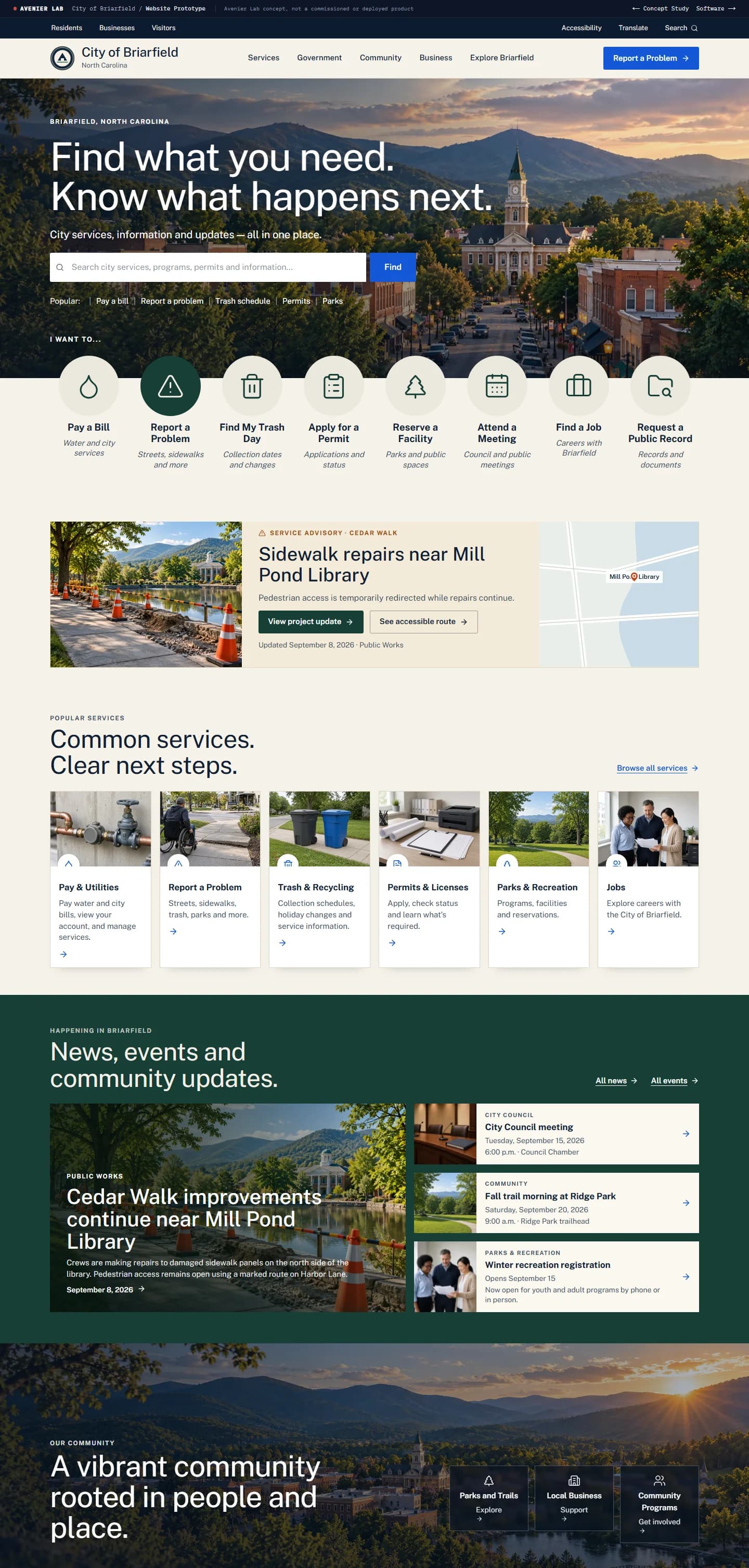 Municipal governmentCity of BriarfieldOne resident concern, followed from the public website through internal operations and back.Technology DirectionService MappingRoadmapOpen the concept study
 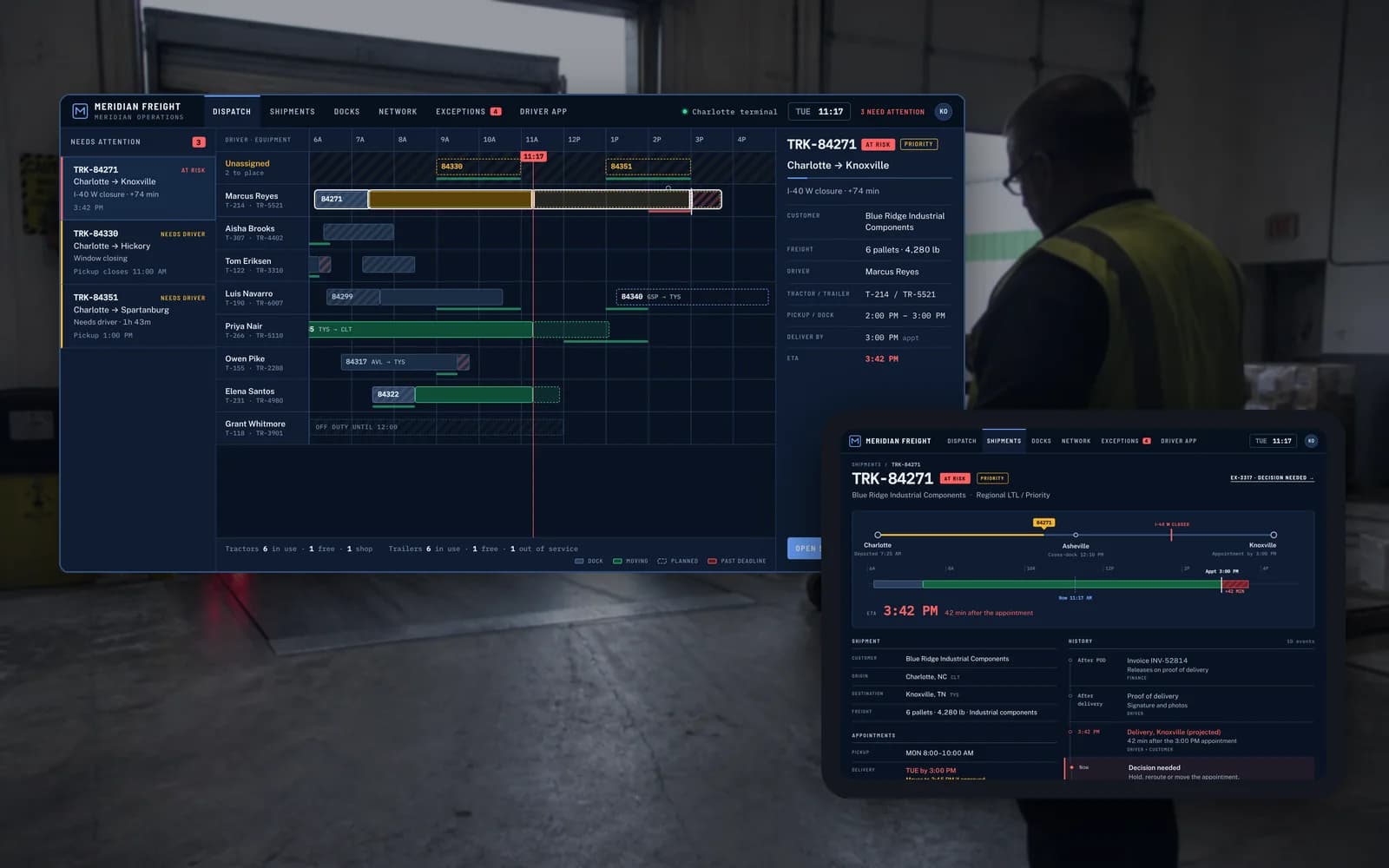 LogisticsLogistics OperationsOne shipment followed from request to proof of delivery, in a system built around how freight actually moves.Custom SoftwareWorkflow DesignCommunications DesignOpen the concept study
 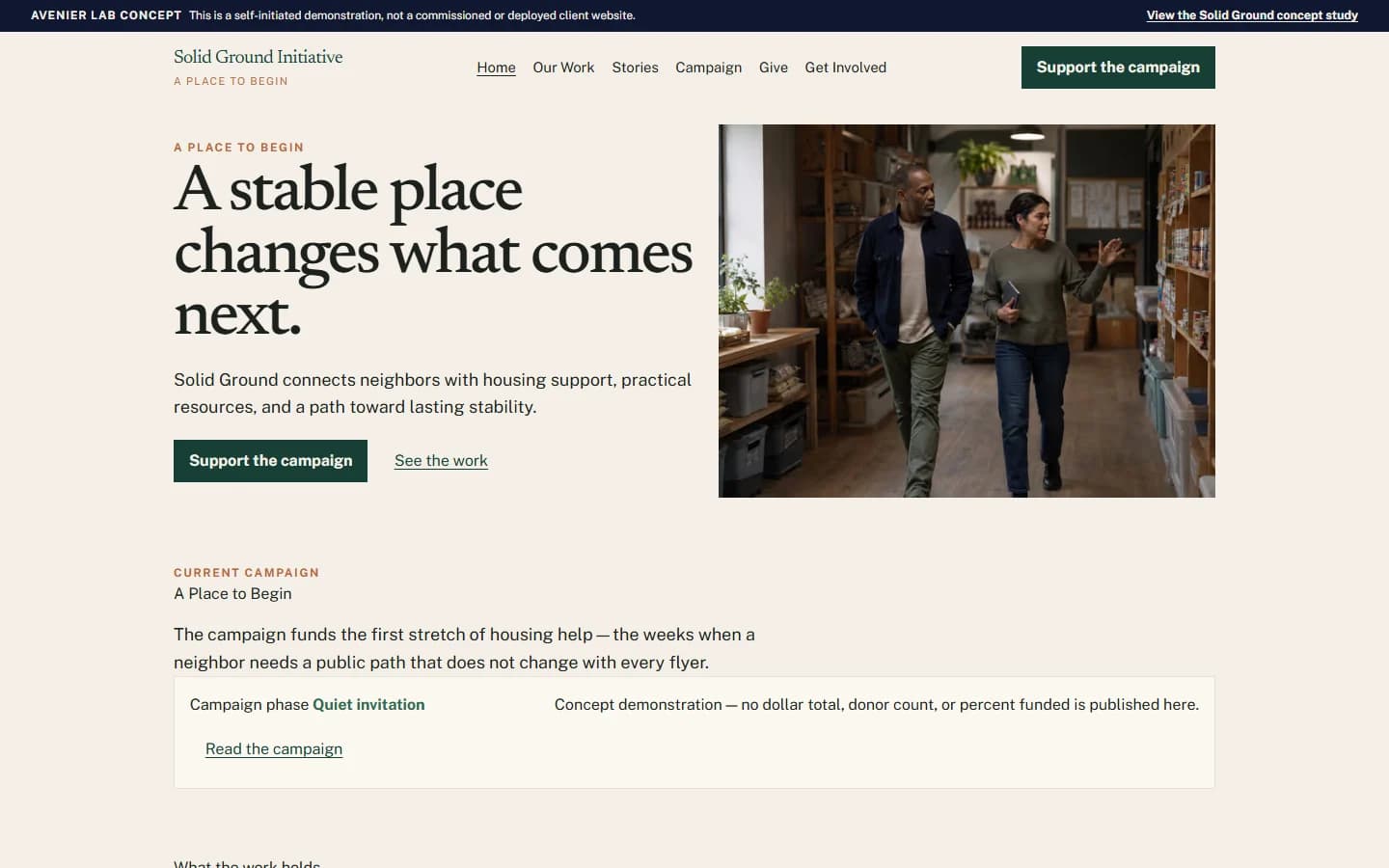 NonprofitSolid Ground InitiativeA supporter journey from campaign story to giving, confirmation and stewardship.Website DevelopmentCommunications DesignOpen the concept study
Starting point · 01
Begin withunderstanding.
You don’t need to arrive with the answer.
Bring us the problem, the pressure, or the thing that isn’t working.
No prepared brief required. Start with what isn’t working.
- A process that isn’t working
- A system that doesn’t fit
- A direction that isn’t clear